



Whether you’re thinking about selling soon or simply curious about your property’s value, one of the most common questions homeowners ask is:
- “How much is my home worth?”
It’s a simple question, but the answer is often more complicated than many people realize.
Home values are influenced by a variety of factors, including location, market conditions, property features, and recent sales activity. While online estimates can provide a starting point, they don’t always tell the full story.
Understanding how home values are determined can help homeowners make informed decisions about selling, refinancing, investing, or planning for the future.
Why Home Value Matters
Knowing your home’s value can help you:
- Estimate potential equity
- Prepare for a future sale
- Evaluate refinancing opportunities
- Make informed financial decisions
- Understand your position in the local market
For homeowners considering selling, an accurate understanding of value is one of the most important parts of creating a successful strategy. Knowing your home’s value helps you make smarter decisions before selling, refinancing, or planning your next move. HAR1 explains that a home’s value can be influenced by amenities, condition, market conditions, and nearby sold listings. This is why homeowners should avoid relying on one number alone and instead look at the full market picture. (HAR)
What Determines a Home’s Value?
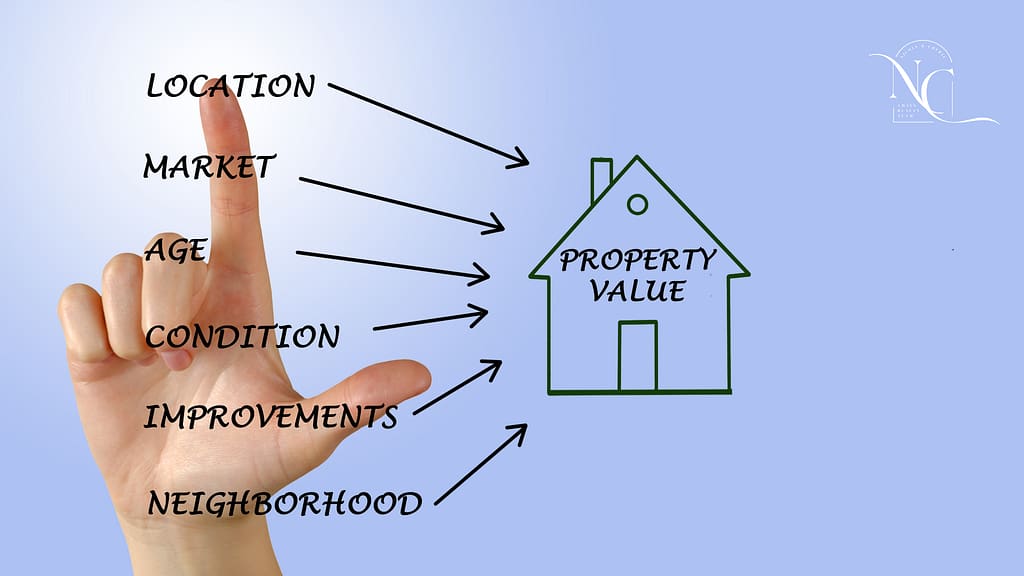
Many factors influence a property’s market value.
Some of the most significant include:
📍 Location
Location remains one of the most important drivers of value.
Factors may include:
- School districts
- Neighborhood demand
- Commute times
- Nearby amenities
- Local development
🏠 Property Size and Features
Buyers often compare:
- Square footage
- Number of bedrooms
- Number of bathrooms
- Lot size
- Garage spaces
- Special features and upgrades
🔧 Condition of the Home
A well-maintained property may appeal more strongly to buyers than a similar home requiring significant repairs.
📈 Recent Market Activity
Home values are heavily influenced by what similar properties have recently sold for in the same area.
A home’s value is shaped by both property-specific details and local market activity. Factors such as location, size, age, condition, upgrades, and nearby comparable sales all help determine what buyers may be willing to pay. Because these factors can change over time, a home’s value should be reviewed using current market data rather than old assumptions.
Why Online Home Value Estimates Aren’t Always Accurate
Many homeowners start by checking online home value estimators.
While these tools can be helpful, they often rely on automated data and may not account for:
- Recent upgrades
- Property condition
- Unique features
- Neighborhood trends
- Local buyer demand
As a result, online estimates can sometimes be significantly higher or lower than actual market value.
- Think of online estimates as a starting point, not a final answer
Online home value tools can be helpful for a quick estimate, but they may not fully account for the home’s condition, recent updates, unique features, or current neighborhood demand. Automated estimates can be limited because they rely heavily on available data and may not reflect the true value of a specific property. This is why an online estimate should be treated as a starting point, not a professional pricing strategy.
Understanding Comparable Sales (Comps)
One of the most reliable ways to estimate value is by reviewing comparable sales, often called:
- “Comps”
Comps are recently sold properties that share similar characteristics with your home.
Real estate professionals typically compare:
- Location
- Size
- Age
- Condition
- Features
- Recent sale prices
These comparisons help establish a realistic market value based on actual buyer behavior. Comparable sales, or comps, are recently sold homes that are similar to the property being evaluated. Rocket Mortgage2 explains that comps are commonly used by buyers, sellers, real estate professionals, and appraisers to better understand fair market value. Reviewing the right comps helps create a more realistic price range based on what buyers have actually paid in the area.
How Local Market Conditions Affect Home Value
Market conditions can significantly influence pricing.
Factors may include:
Seller’s Market
When demand exceeds available inventory, home values may increase.
Buyer’s Market
When inventory exceeds buyer demand, pricing pressure may increase.
Balanced Market
Supply and demand are relatively even.
Local market conditions often change over time, making current data especially important when evaluating value. It can shift based on inventory, buyer demand, interest rates, and recent sales activity. Because comps reflect what similar homes recently sold for, they help show how the current market is responding in a specific area. This is especially useful in Central Texas, where nearby cities or neighborhoods may perform differently depending on demand and available listings.
Do Home Improvements Increase Value?
Many homeowners wonder whether renovations automatically increase value.
The answer:
- Sometimes.
Some improvements may provide stronger returns than others.
Examples often include:
- Kitchen updates
- Bathroom improvements
- Curb appeal enhancements
- Energy-efficient upgrades
- Routine maintenance
However, not every project produces a dollar-for-dollar increase in value. Home improvements can influence value, but they are only one part of the pricing picture. Online estimates and basic market data may not always reflect the full impact of upgrades, especially if the improvement is unique, recent, or not captured in public records. This is one reason professional guidance can help homeowners understand which improvements may matter most to local buyers.
Why Pricing a Home Correctly Matters
For sellers, pricing strategy can be just as important as the home’s condition.
Pricing too high may:
- Reduce buyer interest
- Increase days on market
- Lead to future price reductions
Pricing too low may:
- Leave money on the table
- Undervalue the property
Accurate pricing helps attract qualified buyers and supports a smoother selling process. Pricing a home correctly starts with understanding what comparable homes have actually sold for, not just what a seller hopes to receive. Rocket Mortgage explains that comps help sellers estimate a realistic listing price and understand how their home compares to similar properties nearby. A strong pricing strategy can help create buyer interest while reducing the risk of sitting on the market too long.
What Is a Comparative Market Analysis (CMA)?
A Comparative Market Analysis (CMA) is a report used by real estate professionals to estimate a property’s current market value.
A CMA typically reviews:
- Recently sold homes
- Active listings
- Pending sales
- Market trends
- Property characteristics
Unlike automated online estimates, a CMA includes local market expertise and property-specific considerations. A Comparative Market Analysis is a report prepared by a real estate professional to estimate a home’s current market value. Zillow3 explains that a CMA typically reviews recently sold comparable homes, active listings, pending sales, and property-specific details like size, condition, location, and features. This gives homeowners a more personalized value estimate than an automated tool alone.
When Should You Request a Professional Home Valuation?
A professional valuation may be helpful when:
- Considering selling
- Evaluating equity
- Planning a move
- Comparing market opportunities
- Making long-term financial decisions
A professional valuation or CMA can be especially helpful when a homeowner is preparing to sell, reviewing equity, or trying to understand how their property compares to nearby homes. HAR4 also explains that a CMA can help assess fair market value using relevant property and market data. This gives homeowners clearer guidance before making major financial or selling decisions. Even homeowners who are not planning to sell immediately may benefit from understanding their property’s current market position.
Final Thoughts: Knowing Your Home’s True Market Value
Understanding your home’s value is about more than satisfying curiosity. Whether you’re considering selling, refinancing, relocating, or simply planning for the future, knowing what influences market value can help you make more informed decisions.
While online estimates can provide a helpful starting point, they often can’t account for the unique features, condition, and local market factors that impact a property’s true value. That’s why professional guidance and local market knowledge remain valuable tools when evaluating a home’s worth.
At Twins Realty Group, homeowners receive personalized guidance based on current market conditions, comparable sales, and real-world experience in the Central Texas market. By combining local real estate expertise with a deep understanding of financing and market trends, Twins Realty Group helps homeowners gain a clearer picture of their property’s value and potential opportunities.
If you’re wondering what your home may be worth in today’s market, Twins Realty Group can help you better understand your options and provide insight into current market conditions across Central Texas. One twin handles the loan. One secures the home. One smooth experience for you.